Kenya Proposes Stamp Duty Exemption for Land Worth KSh 1 Million or Less: What Buyers Need to Know
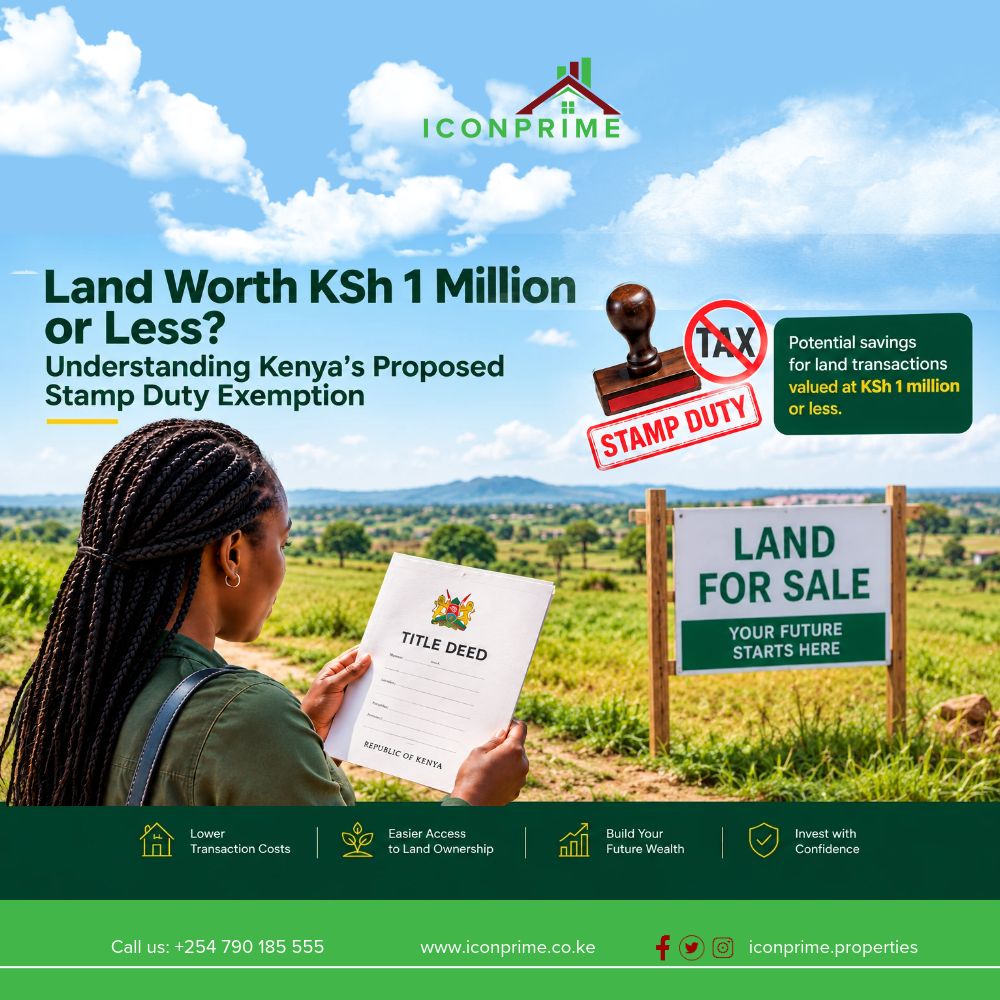
Stamp duty on land in Kenya could soon cost less for buyers at the lower end of the market, after President William Ruto proposed exempting land transactions valued at KSh 1 million or less — but it’s a proposal for now, not law.
The announcement was made during the 63rd Mashujaa Day celebrations in Eldoret on October 20, 2026, as part of a broader set of proposals aimed at reducing the cost of living and making property ownership more accessible. According to Kenyans.co.ke, the National Treasury has developed proposals to introduce the exemption while applying progressive stamp duty rates to higher-value property transactions, with the proposals expected to go to Parliament for consideration.
For Kenyans buying a first plot, investing in land outside major towns, or securing property for their families, this raises a practical question: how much could you save, and what should you do before your next purchase?
What Is Stamp Duty When Buying Land in Kenya?
Stamp duty is a government tax payable on certain legal instruments used to transfer ownership of property. When you buy land in Kenya, you generally need to budget for it as part of the transfer process. The amount depends on the applicable rate and the property’s assessed value. Under the existing general framework, the commonly applied rates are:
- 4% for property within municipalities and other designated urban areas
- 2% for property outside municipalities, including qualifying rural property
The applicable classification and valuation should be confirmed during the transaction, because the amount used to calculate stamp duty may depend on the government’s assessment of the property. For example, land valued at KSh 1 million would generally attract KSh 40,000 in stamp duty at 4% or KSh 20,000 at 2%.
How Much Could You Save Under the Proposed Exemption?
If the measure is approved and implemented, land transactions valued at KSh 1 million or less would be exempt from stamp duty. Here are illustrative savings based on the existing general rates:
| Land Value | Stamp Duty at 4% | Stamp Duty at 2% | Potential Saving If Exempt |
|---|---|---|---|
| KSh 300,000 | KSh 12,000 | KSh 6,000 | KSh 6,000 – 12,000 |
| KSh 500,000 | KSh 20,000 | KSh 10,000 | KSh 10,000 – 20,000 |
| KSh 750,000 | KSh 30,000 | KSh 15,000 | KSh 15,000 – 30,000 |
| KSh 1,000,000 | KSh 40,000 | KSh 20,000 | KSh 20,000 – 40,000 |
These figures are illustrative calculations, not confirmation of an enacted exemption. The actual saving would depend on the final legislation, the applicable property classification, and the official valuation.
The savings wouldn’t eliminate every cost of buying land, but for someone working within a tight budget they could make a real difference.
Why This Proposal Matters to First-Time Land Buyers
For many Kenyans, land means financial security, a place to build a home, and a way to create wealth over time. But the total cost of acquiring property often extends beyond the advertised price, with legal services, searches, valuation, and registration all adding up. A stamp duty exemption for qualifying transactions could ease that initial burden in three ways.
1. Making Land Ownership More Accessible
First-time buyers often start with a limited budget. Lower transaction costs could make it easier to complete a qualifying purchase without stretching finances as far. Even so, buyers should make sure they can comfortably afford the purchase and any remaining fees.
2. Supporting Long-Term Property Investment
Land may appreciate over time, though future value is never guaranteed. Buyers in areas with infrastructure development, population growth, or rising economic activity may benefit from future demand, but appreciation depends on location, accessibility, planning restrictions, market conditions, and available services. Lower upfront costs could let some buyers direct more of their funds toward their wider investment plans.
3. Helping Families Plan for the Future
For households buying lower-value plots to build a home, start a business, or preserve assets for the next generation, potential stamp duty savings could ease some of the financial pressure. The key is to buy carefully, verify the property’s legal status, and choose land that meets the family’s intended needs.
Will All Land-Buying Costs Disappear?
No. Even if the proposal becomes law, an exemption from stamp duty wouldn’t automatically remove every expense. Depending on the transaction, buyers may still need to budget for:
- Land search fees to obtain official information on the property’s registered details and ownership
- Legal fees where an advocate reviews documents and assists with the transaction
- Valuation costs where applicable
- Registration fees for registering the transfer or other relevant instruments
- Survey and subdivision costs where the property needs survey work, subdivision, or related approvals
- Other applicable charges depending on the property, transaction structure, and relevant authorities
Request a breakdown of all expected expenses before committing to a purchase. It’s also worth separating stamp duty from annual land rates, land rent where applicable, and capital gains tax obligations that may arise in other circumstances — these are separate matters and wouldn’t disappear because of this proposal.
Is the Stamp Duty Exemption Already in Effect?
No. The October 20, 2026 announcement concerned a proposal, not confirmation that the exemption has taken effect. President Ruto said the National Treasury had developed proposals to exempt qualifying land transactions valued at KSh 1 million or less and introduce progressive rates for higher-value transactions, to be submitted to Parliament for consideration.
That distinction matters because an announcement alone doesn’t change the taxes payable on a property transaction. The legislative and implementation steps must be completed first. Before buying, confirm the applicable stamp duty requirements with the relevant land registration authorities, the Kenya Revenue Authority where appropriate, or a qualified property advocate.
What Could Progressive Stamp Duty Rates Mean for Higher-Value Land?
The government has also proposed progressive rates for higher-value land transactions, meaning the tax structure would vary by property value or other thresholds. The precise rates, thresholds, and calculation method will depend on the final policy and legislation. Until they’re formally set, buyers of higher-value property should verify the applicable requirements rather than assume their stamp duty will rise or fall.
For investors, the announcement is a reminder that the purchase price is only one part of the decision. Weigh taxes and transaction costs alongside location, documentation, development potential, accessibility, and long-term suitability.
What to Check Before Buying Land in Kenya
A proposed tax cut shouldn’t distract you from the checks that protect your investment.
- Conduct an official land search. Confirm the registered details match the documents presented, and look into any registered restrictions, charges, or other interests.
- Verify the seller’s ownership. Confirm the seller has legal authority to sell, and get professional help verifying the title and the seller’s identity where needed.
- Confirm the actual plot location. Visit the property and, where appropriate, have a qualified surveyor confirm location and boundaries. Check access roads, neighbouring developments, and utilities.
- Understand the total cost. Ask for a clear breakdown, which charges apply, who pays them, and whether any proposed tax relief has officially taken effect.
- Review the documentation before paying. Read the sale agreement carefully, and avoid large payments based on verbal assurances or promises that documents will come later.
How Icon Prime Investments Ltd Can Help You Begin
At Icon Prime Investments Ltd, we believe buying land should be a well-informed decision backed by clear information, proper documentation, and a full understanding of the investment. Our portfolio includes options in Kitengela, Juja, Ngong, Naivasha, Nanyuki, Koma, and Diani, with projects suited to different budgets and goals. Depending on the project, buyers may also benefit from instalment arrangements that help them plan their payments.
If the proposed exemption is enacted, eligible buyers could benefit from lower transaction costs. Until then, plan using the currently applicable requirements and confirm any changes through official channels.
Frequently Asked Questions About the Proposed Stamp Duty Exemption
- Will land worth KSh 1 million or less be exempt from stamp duty?
- President William Ruto announced a proposal to exempt land transactions valued at KSh 1 million or less. The proposal must go through the relevant legislative and implementation processes before buyers can rely on it.
- How much is stamp duty on KSh 1 million land in Kenya?
- Using the commonly applied general rates, it would be KSh 40,000 at 4% or KSh 20,000 at 2%. The applicable rate depends on the property’s classification and other relevant requirements.
- Does the proposed exemption cover legal fees and registration charges?
- Not automatically. The proposal concerns stamp duty only, so other transaction expenses may remain payable.
- Should I delay buying land until the exemption takes effect?
- That depends on your finances, the property, and your investment objectives. Consider the total cost, the property’s legal status, and the timing of your plans, and confirm current tax requirements before completing the transaction.
- Can I buy land through an instalment payment plan?
- Some sellers offer instalment arrangements, subject to the terms of the project and sale agreement. Confirm the deposit, payment schedule, fees, and title transfer conditions before committing.
Final Thoughts: Stay Informed Before Your Next Land Investment
If implemented, the proposed exemption could reduce the initial cost of qualifying land purchases and make it easier for some households to take the first step toward ownership. But a proposal isn’t an enacted exemption, so keep budgeting for applicable taxes and transaction expenses until the changes are formally in force.
More importantly, a good land investment starts with due diligence: verify ownership, understand the location, review the documentation, and establish the full cost before committing your money.
Ready to Explore Land Ownership Opportunities in Kenya?
Discover available projects, discuss your budget, and learn about payment options for selected properties.
View Available Plots📞 Call: 0790 185 555 | 🌐 iconprime.co.ke
Sources: Kenyans.co.ke; Business Daily; The Standard; Citizen Digital — reporting on the President’s Mashujaa Day address, October 20, 2026. This article is for general information only and is not legal or tax advice. Confirm current requirements with the relevant authorities before transacting.